Explainer
Types of Ghee: Cow, Buffalo, Goat, Sheep, Camel & Yak Ghee Compared
Ghee is classified two ways: by the animal (cow, buffalo, goat, sheep, camel or yak) and by how it is made (bilona from curd, from cream, or from butter). In India almost all ghee is cow or buffalo; cow ghee is golden and aromatic, buffalo ghee is white and richer. Goat, sheep, camel and yak ghee are regional specialities.
Quick take
- By animal: cow and buffalo dominate in India; goat, sheep, camel and yak ghee are niche.
- By method: bilona (curd → makhan → ghee) vs cream or butter-based ghee.
- Labels like A2, grass-fed, organic and cultured describe the milk or process, not a new animal.
- Pick by use: buffalo for rich cooking and sweets, cow for a lighter, aromatic ghee.
Walk down any ghee aisle and you will see “A2”, “bilona”, “desi”, “Gir”, “grass-fed” and more. They are not all the same kind of label. This guide sorts every type of ghee into two simple questions: which animal’s milk? and how was it made?
Types of ghee by animal
| Ghee | Colour & taste | Where it is used |
|---|---|---|
| Cow ghee | Golden-yellow, light, aromatic | All over India; favoured in Ayurveda — cow ghee benefits |
| Buffalo ghee | White to creamy, rich, grainy | North and West India; sweets and cooking — what is buffalo ghee |
| Goat ghee | White, mild with a faint tang | Small-scale in parts of India and Africa; rare commercially |
| Sheep ghee | Pale, strong and distinctive | Middle East and North Africa (part of the samn tradition) |
| Camel ghee | Pale, mild | Desert regions of Rajasthan, the Gulf and the Horn of Africa; very niche |
| Yak ghee | Deep yellow, rich | Himalayas and Tibet, including butter tea |
Why is buffalo ghee white and cow ghee yellow? Cows pass more of the yellow pigment beta-carotene into their milk fat, while buffalo convert it to colourless vitamin A. Neither colour means one is purer. Full head-to-head: buffalo ghee vs cow ghee.
Types of cow ghee by breed
Within cow ghee, the breed matters for A2 status and flavour. Indigenous breeds such as Gir, Sahiwal, Red Sindhi and Tharparkar give A2 milk; crossbred and exotic breeds such as Jersey and Holstein Friesian usually give A1 milk (A2 vs A1 ghee). Choosing one? See best A2 cow ghee. Among buffalo, the best-known dairy breed is the Murrah.
Types of ghee by method
- Bilona ghee: whole milk → curd → hand-churned makhan → slow-cooked ghee. Most traditional and most labour-intensive — bilona method explained.
- Malai (cream) ghee: cream skimmed from milk, collected and heated. The common home method — how to make ghee at home.
- Butter / dairy ghee: industrial ghee made from separated cream or white butter. Consistent and affordable.
- Cultured ghee: made from fermented cream or curd, giving a tangier aroma — cultured ghee. Bilona ghee is a type of cultured ghee.
Labels that describe the milk, not the type
- A2 ghee: from animals that produce only A2 beta-casein — what is A2 ghee.
- Desi ghee: everyday Indian word for pure ghee; not a specific type — A2 vs desi ghee.
- Grass-fed ghee: from pasture-fed animals — grass-fed ghee.
- Organic ghee: from certified-organic farms — organic ghee.
- Vedic ghee: a marketing term for traditionally made ghee — vedic ghee.
Not ghee at all: vanaspati (dalda) is hydrogenated vegetable oil — see dalda vs ghee.
Which type of ghee is best?
For most Indian kitchens it comes down to cow or buffalo. Choose buffalo ghee for rich cooking, sweets and better value per litre; choose cow ghee for a lighter, aromatic ghee and Ayurvedic use. Whichever you pick, method and purity matter more than the animal — see best A2 ghee in India.
Frequently asked questions
What are the different types of ghee?
By animal: cow, buffalo, goat, sheep, camel and yak ghee. By method: bilona ghee from curd, malai or cream ghee, industrial butter-based ghee and cultured ghee. Labels such as A2, grass-fed and organic describe the milk source.
Which type of ghee is best?
For most people cow or buffalo ghee. Buffalo ghee is richer and better for cooking and sweets; cow ghee is lighter and aromatic. A traditional method and verified purity matter more than the animal.
Is there goat or sheep ghee?
Yes. Goat ghee is made in small quantities in parts of India and Africa, and sheep ghee is traditional in the Middle East and North Africa. Both are rare compared with cow and buffalo ghee.
Why is buffalo ghee white and cow ghee yellow?
Cows pass more beta-carotene, a yellow pigment, into their milk fat, while buffalo convert it into colourless vitamin A. The colour difference does not indicate purity.
Taste the richest type of ghee
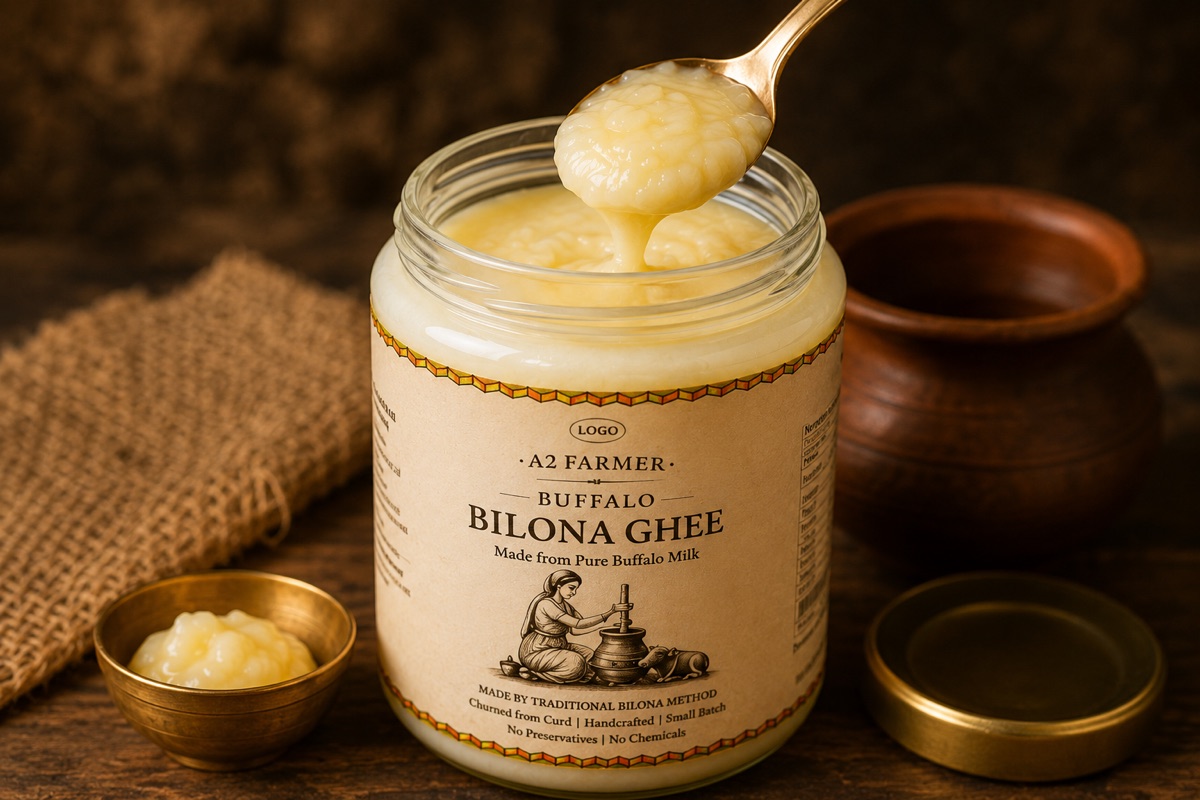
A2 Farmer Buffalo Bilona Ghee — naturally A2, hand-churned, lab-verified and glass-packed.
Shop Pure Ghee →