Ghee 101
What Is Ghee? Meaning, How It’s Made, Types, Benefits & Uses
Ghee is a type of clarified butter from India: butter (or cultured makhan) is simmered until its water evaporates and the milk solids turn golden and are strained out, leaving almost pure milk fat. It has a nutty aroma, a smoke point of about 250°C, almost no lactose, and keeps for months without a fridge.
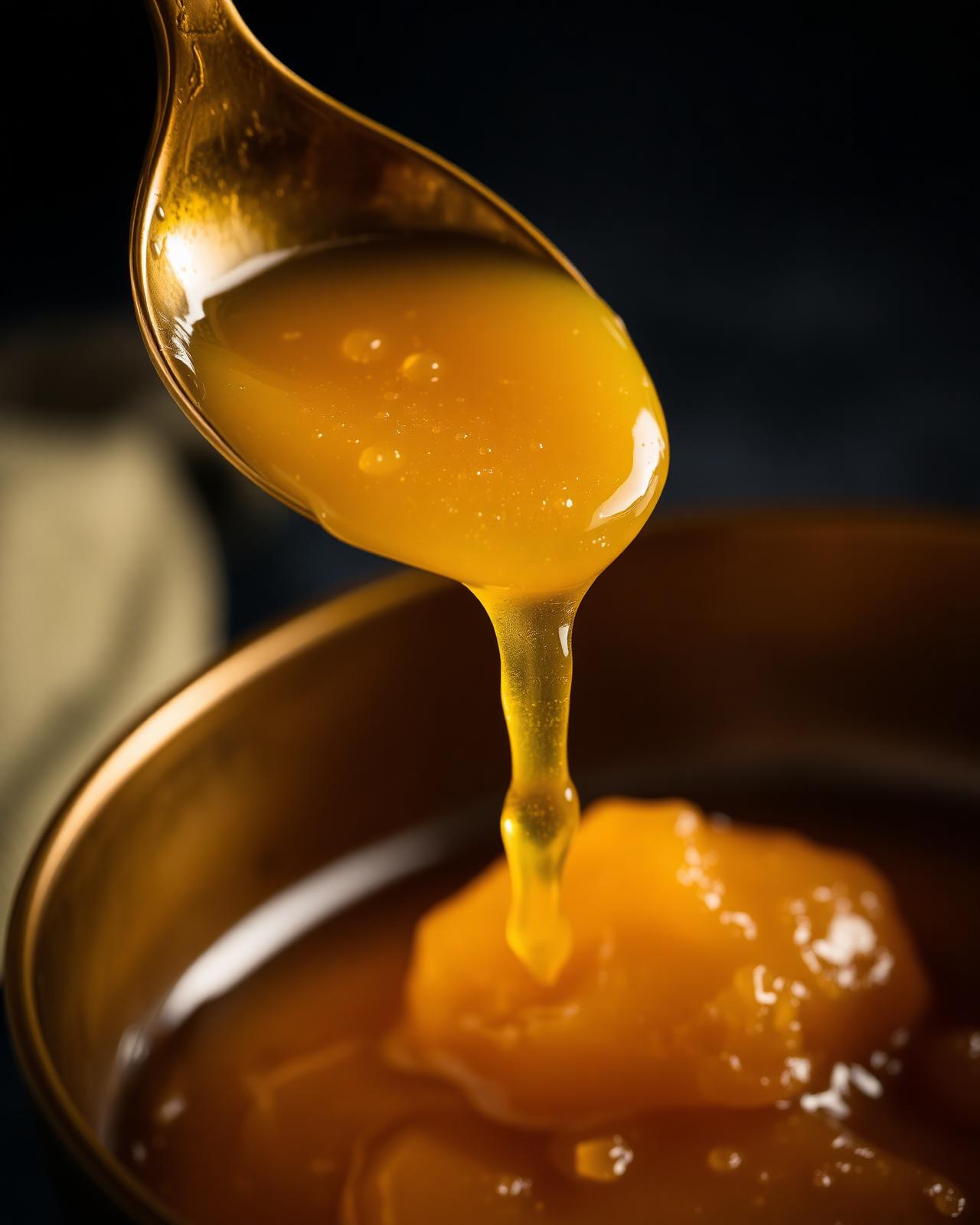
Quick take
- Ghee = butter minus water and milk solids, cooked until nutty.
- Made from cow or buffalo milk; the traditional way is bilona (curd → makhan → ghee).
- About 99.5%+ milk fat, ~45 kcal per teaspoon, rich in vitamins A, D, E, K.
- Great for high-heat cooking; enjoy 1–2 teaspoons a day.
Ghee meaning: what is ghee in English?
“Ghee” (Hindi घी, from the Sanskrit ghṛta, “sprinkled”) has no exact English word. The closest is clarified butter, but ghee is cooked longer, until the milk solids brown, which gives it a nuttier taste and longer life (clarified butter vs ghee). People sometimes call it “ghee oil” or “ghee butter”; it is neither an oil nor ordinary butter, but pure milk fat that is solid in cool weather and liquid when warm.
How is ghee made?
- Start with milk fat: either cream/butter (common, fast) or whole milk set to curd and churned into makhan (the traditional bilona method).
- Simmer: the butter is heated gently; water boils off and milk proteins sink and brown.
- Strain: the clear golden fat is filtered from the browned solids.
- Cool: pure ghee sets grainy (danedar) as it cools.
Try it yourself with how to make ghee at home.
Types of ghee
By animal: cow ghee (golden, aromatic) and buffalo ghee (white, richer) are the two you will find in India; goat, sheep, camel and yak ghee are regional. By method: bilona, cream (malai) and industrial butter ghee. Labels like A2, grass-fed and organic describe the milk. Full guide: types of ghee.
Ghee nutrition at a glance
| Per teaspoon (~5 g) | Amount |
|---|---|
| Calories | ~40–45 kcal |
| Fat | ~5 g (about two-thirds saturated) |
| Protein, carbs, lactose | Practically none |
| Vitamins | A, D, E, K (fat-soluble) |
Full lab-verified breakdown: ghee nutrition facts.
Benefits of ghee
Used in moderation, ghee helps you absorb fat-soluble vitamins, provides butyric acid for gut health, stays stable at high heat, and is tolerated by many lactose-sensitive people. It is still a saturated fat, so the dose matters. Read the honest version in ghee benefits and is ghee healthy?
How to use ghee
- Tadka and frying: high smoke point (ghee smoke point).
- On roti, rice and dal: a half-teaspoon finish (ghee on roti).
- Sweets: ladoo, halwa, barfi (ghee for Diwali sweets).
- Wellness rituals: in warm milk or on an empty stomach (best time to eat ghee).
How to choose good ghee
Look for a named source (cow breed or buffalo), a traditional method, a batch lab report (milk fat ≥ 99.5%, Baudouin test negative) and glass packing. Spotting fakes: how to identify pure ghee. Our own results are public on the A2 Farmer lab report.
Frequently asked questions
What is ghee made of?
Ghee is made from butter or cultured makhan that is simmered until the water evaporates and the milk solids brown and are strained out. What remains is almost pure milk fat.
What is ghee called in English?
Ghee is usually translated as clarified butter. Strictly, ghee is clarified butter cooked a little longer until the milk solids brown, giving it a nuttier flavour.
Is ghee an oil or butter?
Neither exactly. Ghee is pure milk fat made from butter; it is solid in cool weather and liquid when warm, and it is used like a cooking oil.
Is ghee healthy?
In moderation, yes. One to two teaspoons a day adds flavour, fat-soluble vitamins and gut-friendly butyric acid. Because it is high in saturated fat, larger amounts are not recommended.
Which ghee is best, cow or buffalo?
Both are good. Cow ghee is lighter and aromatic; buffalo ghee is richer and creamier, ideal for cooking and sweets. Purity and method matter more than the animal.
Ghee the way it should be
A2 Farmer Buffalo Bilona Ghee — naturally A2, hand-churned, 99.76% milk fat, glass-packed. From ₹649.
Shop Pure Ghee →