Nutrition
Ghee Nutrition Facts: Calories in 1 Tsp & 1 Tbsp, Fat, Protein & Vitamins
One teaspoon of ghee (about 5 g) has roughly 40–45 calories and 5 g of fat; one tablespoon (about 13–14 g) has roughly 112–126 calories and 13–14 g of fat. Ghee has almost no protein or carbohydrate and supplies fat-soluble vitamins A, D, E and K.
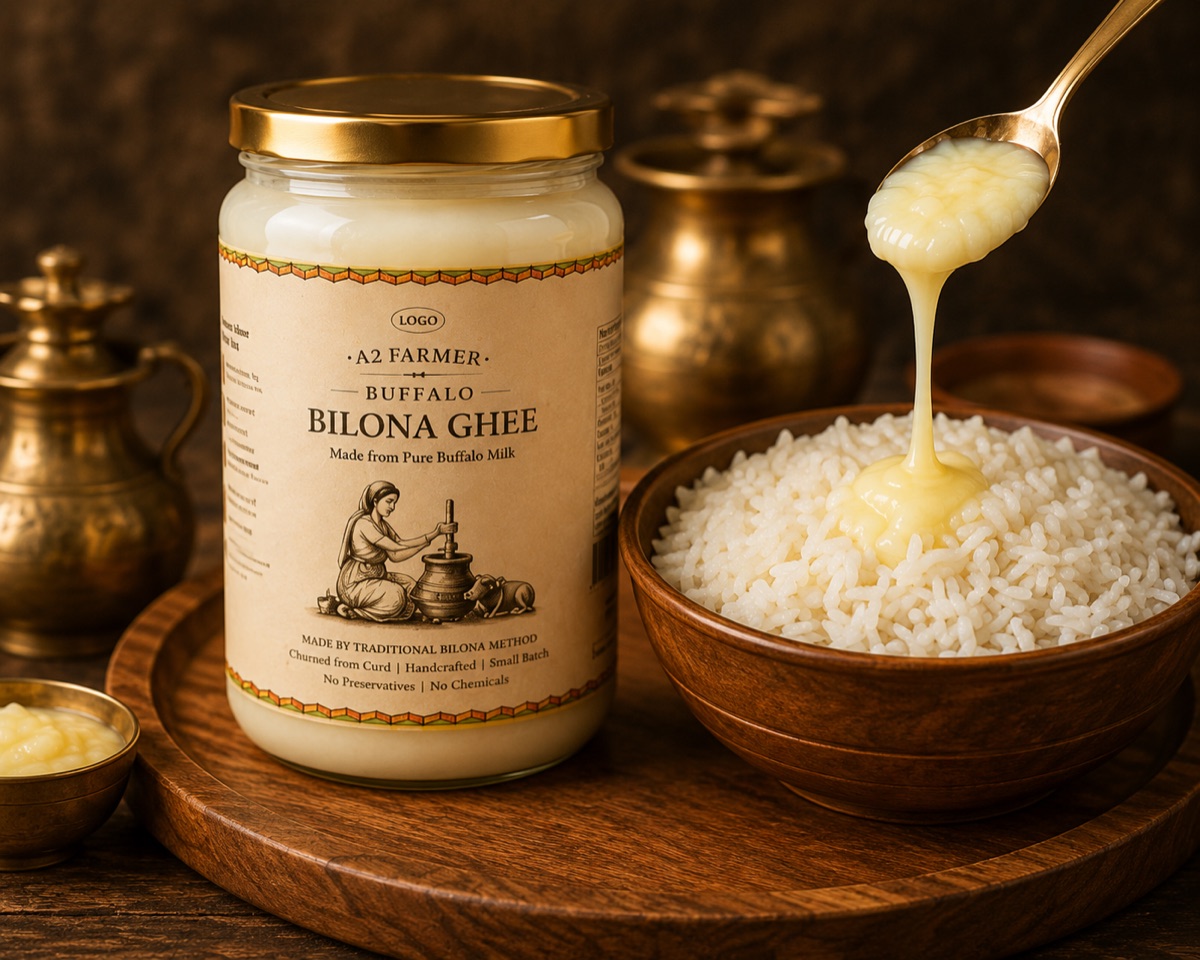
Ghee at a glance (per teaspoon, ≈5 g)
- ~45 calories · 5 g fat (3.6 g saturated) · 11 mg cholesterol
- 0 g protein, carbs and sugar — ghee is pure fat
- Carries vitamins A, D, E, K and butyric acid
Ghee is one of the simplest foods there is — almost entirely fat — but people still ask exactly what's in it. Rather than quote generic figures, here are the numbers from our own NABL-accredited lab report, so you know precisely what a spoon of pure buffalo ghee delivers.
Ghee nutrition facts (lab-verified)
| Nutrient | Per 100 g | Per tsp (≈5 g) |
|---|---|---|
| Energy | 898 kcal | ~45 kcal |
| Total Fat | 99.76 g | ~5 g |
| — Saturated Fat | 71.4 g | ~3.6 g |
| — Monounsaturated (MUFA) | 26.5 g | ~1.3 g |
| — Polyunsaturated (PUFA) | 1.9 g | ~0.1 g |
| — Trans Fat | <0.1 g | ~0 g |
| Cholesterol | 224 mg | ~11 mg |
| Carbohydrate | <1 g | ~0 g |
| Sugar | <2 g | ~0 g |
| Protein | <0.01 g | ~0 g |
| Sodium | 2 mg | ~0 mg |
What the numbers mean
Calories & fat
Ghee is pure fat, so it's calorie-dense: about 45 kcal a teaspoon. Most of that is saturated fat, which is why ghee is best used in moderation — but note it also has a meaningful amount of heart-friendlier monounsaturated fat, and almost no trans fat (unlike vanaspati).
Cholesterol
As an animal fat, ghee contains dietary cholesterol — about 11 mg per teaspoon. Dietary cholesterol affects people differently from saturated fat.
Protein, carbs & sugar: basically none
The ghee-making process removes the milk solids, so protein, carbs, lactose and sugar are all near zero. That's why ghee suits many low-carb and lactose-sensitive eaters.
Vitamins & butyric acid
Ghee carries fat-soluble vitamins A, D, E and K, plus butyric acid that supports gut health — the nutritional highlights behind the full ghee benefits.
How much should you eat?
For most healthy adults, 1–3 teaspoons a day is a sensible amount — a nutritious, flavourful fat, not a bulk calorie source. Trying to gain or lose weight? See ghee for weight gain and ghee for weight loss.
Calories in ghee per teaspoon and tablespoon
| Serving | Weight | Calories | Fat | Saturated fat |
|---|---|---|---|---|
| 1 teaspoon | ~4.5–5 g | ~40–45 kcal | ~5 g | ~3–3.6 g |
| 1 tablespoon | ~13–14 g | ~112–126 kcal | ~13–14 g | ~8–10 g |
| 100 g | 100 g | 876–898 kcal | 99.5–99.8 g | 62–71 g |
Lower figures: USDA FoodData Central (“butter oil, anhydrous”, 876 kcal/100 g). Higher figures: our NABL lab report on A2 buffalo ghee (898 kcal/100 g). Buffalo ghee runs higher in saturated fat than cow ghee.
How many grams is 1 teaspoon of ghee?
About 5 g for a level teaspoon of soft or grainy ghee, and closer to 4.5 g when it is melted. A level tablespoon is about 13–14 g. If you are counting carefully, weigh it once — spoons vary a lot.
Does ghee have protein or carbs?
Practically none. Making ghee removes the milk solids where the protein and lactose live — our lab measured less than 0.01 g protein and under 1 g carbohydrate per 100 g. That is why ghee is zero-carb for keto and tolerated by many lactose-sensitive people (is ghee dairy-free?).
Vitamins in ghee
Ghee is a natural carrier of the fat-soluble vitamins A, D, E and K. Amounts vary with the animal's diet — grass-fed milk generally gives more (grass-fed ghee). Its bigger nutritional role is helping you absorb these vitamins from the rest of your meal. For daily amounts see how much ghee per day.
Sources & references
Frequently asked questions
How many calories are in a teaspoon of ghee?
About 45 calories per teaspoon (≈5 g). Ghee is almost pure fat — 898 kcal per 100 g in our lab test.
How much fat is in ghee?
About 99.76% — per 100 g: ~71 g saturated, ~26 g MUFA, ~2 g PUFA, and under 0.1 g trans fat.
Does ghee have protein or carbs?
Almost none — under 0.01 g protein and under 1 g carbohydrate per 100 g.
How many calories are in 1 teaspoon of ghee?
About 40 to 45 calories. USDA FoodData Central lists ghee (anhydrous butter oil) at 876 kcal per 100 g; our lab-tested buffalo ghee is 898 kcal per 100 g, and a level teaspoon weighs about 4.5 to 5 g.
How many grams is 1 teaspoon of ghee?
About 5 g for a level teaspoon of soft ghee and about 4.5 g when melted. A tablespoon is about 13 to 14 g.
Does ghee contain protein?
Practically none. Making ghee removes the milk solids, so ghee has less than 0.01 g of protein per 100 g in our lab test.
How much saturated fat is in ghee?
Roughly 62 to 71 g per 100 g, or about 8 to 10 g per tablespoon. Buffalo ghee is at the higher end of that range.
Nutrition you can verify
A2 Farmer Buffalo Bilona Ghee — lab-tested, 99.76% milk fat, nothing hidden.
Shop A2 Buffalo Ghee →