Bilona Method
What Is Bilona Ghee? The Bilona Method Explained
Bilona ghee is made from cultured curd, hand-churned into butter and slow-cooked. Regular ghee is usually made by machine from cream. Bilona keeps more aroma, the grainy texture and nutrients.
In one line
- The bilona method makes ghee from cultured curd — not cream — by hand-churning it into butter and slow-cooking it.
- It keeps the aroma, grainy texture and nutrients that fast, machine methods strip away.
- Watch the label: "bilona" is often used loosely. Ask whether it's curd-churned and how.
"Bilona" is suddenly on every ghee jar in India. But most shoppers have never been told what it actually means — which makes it easy to slap on a label without doing the work. Here's the real method, why it matters, and how to tell genuine bilona ghee from the marketing version.
Bilona ghee meaning
Bilona is the Hindi word for the wooden churner (and the act of churning). Bilona ghee means ghee made the old way: whole milk is boiled and set to curd, the curd is hand-churned with a bilona into makhan, and the makhan is slow-cooked into ghee. Most factory ghee skips the curd and churning and is made from separated cream instead. Made from A2 milk, it is called A2 bilona ghee; see our own six steps in how A2 Farmer ghee is made.
What is the bilona method?
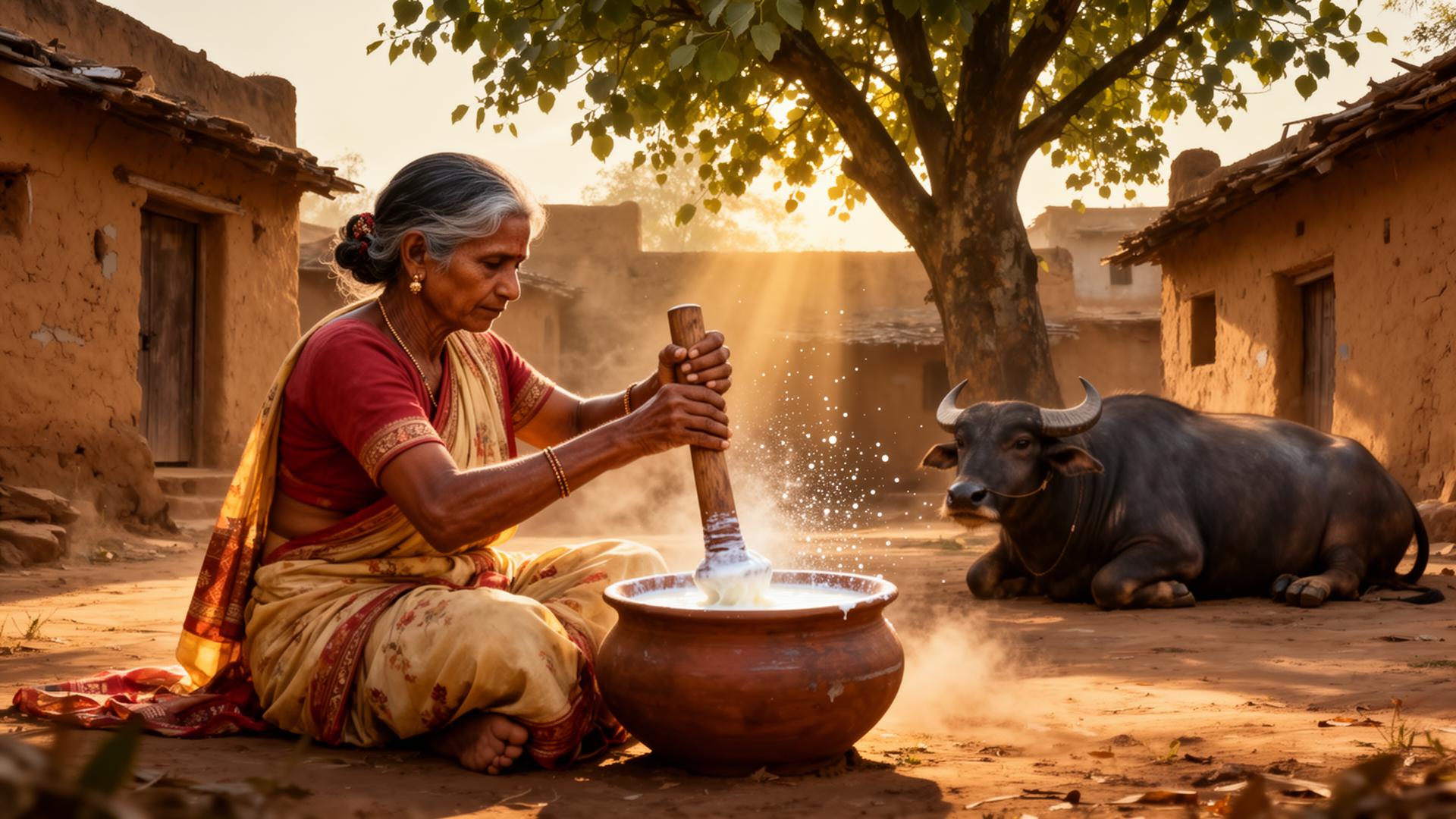
A bilona is the traditional wooden churn — a staff turned back and forth with a rope. The bilona method (also called the Vedic or ashta-manthan method) is the old way of making ghee that starts from curd, not cream. It's slower, more laborious, and it's how ghee was made in Indian homes for thousands of years.
The crucial distinction is right at the start: curd first, not cream. Industrial ghee is usually made by separating cream from milk with a machine and clarifying that. Bilona ghee ferments the whole milk into curd first — and that fermentation is a big part of why the final ghee tastes and behaves differently.
The four steps, start to finish
Step 1 — Culture the milk into curd
Fresh whole milk is set into curd (dahi) overnight using a natural culture. Nothing is skimmed or separated — the full milk, fat and all, becomes curd. This overnight fermentation develops flavour and makes the fat easier to work with.
Step 2 — Hand-churn the curd on a bilona
The curd is churned by hand — pulled back and forth on the wooden bilona — until butter (makkhan) separates and floats to the top. This is the slow, rhythmic step you picture when you think of a village kitchen. Doing it by hand, at a gentle pace, keeps the butter from overheating.
Step 3 — Collect the white butter
The fresh white butter is skimmed off and washed. What's left behind is traditional buttermilk (chaas) — nothing is wasted.
Step 4 — Slow-cook the butter into ghee
The butter is simmered gently over a low flame. The water evaporates, the milk solids settle and lightly brown, and the fat turns clear, golden and fragrant. Cooked slowly, it develops the signature nutty aroma and the grainy (daanedar) texture that is the hallmark of real bilona ghee.
Curd cultured overnight, hand-churned to butter, slow-cooked to gold. No shortcuts — that's the whole method.
Why go to all this trouble?
- Nutrient retention. Gentle, low-heat cooking protects the fat-soluble vitamins and the delicate fatty acids, rather than blasting them at high heat.
- Aroma and taste. The overnight culture and slow cook produce a depth of flavour that cream-separated, machine-made ghee simply can't match.
- The grainy texture. Real bilona ghee turns grainy as it sets — a visual sign of a slow, traditional cook.
- No shortcuts, no additives. Just milk, culture, time and hands.
It also explains the price. It takes roughly 25–30 litres of milk and hours of labour to make a single litre of bilona ghee. That craft is what you're paying for.
The "bilona" label trap
Because the word sells, it gets stretched. A few honest warnings:
- Machine "bilona." Some producers use electric churners and still call it bilona. The curd-first principle may hold, but the hand-churned character is lost.
- Cream-based ghee labelled bilona. If it starts from cream rather than curd, it isn't the traditional method at all.
- No detail at all. A trustworthy brand will happily tell you the animal, the milk (curd vs cream), and how it's churned.
The fix is simple: ask two questions. Is it made from curd? and How is it churned? Genuine makers answer instantly.
How A2 Farmer makes it
We make our ghee from naturally A2 Murrah buffalo milk, cultured to curd overnight, hand-churned on a bilona, and slow-cooked in small batches. Every batch is lab-tested for purity and sealed in glass. You can read the full process on our bilona method page.
Frequently asked questions
What's the difference between bilona ghee and regular ghee?
Bilona ghee is made from cultured curd, hand-churned into butter and slow-cooked. Regular ghee is usually made by machine from cream. Bilona keeps more aroma, the grainy texture and nutrients.
Why is bilona ghee more expensive?
It takes about 25–30 litres of milk and hours of hand-churning to make one litre — far more milk and labour than machine ghee.
Is grainy ghee a sign of purity?
Grainy (daanedar) texture is a good sign of a slow, traditional cook. Pure ghee also naturally turns grainy in winter and liquid in summer.
What is bilona ghee?
Bilona ghee is ghee made from curd rather than cream: whole milk is set to curd, hand-churned with a wooden bilona into makhan, and the makhan is slow-cooked into ghee.
What does bilona mean?
Bilona is the Hindi word for a wooden churner and for churning curd by hand. Bilona ghee is ghee made using this traditional churning method.
Ghee made the way it always was
A2 Farmer Buffalo Bilona Ghee — curd-churned by hand, slow-cooked, small batch.
Shop Bilona Ghee →