Ghee · Methods
Malai Ghee vs Bilona Ghee: What’s the Difference?
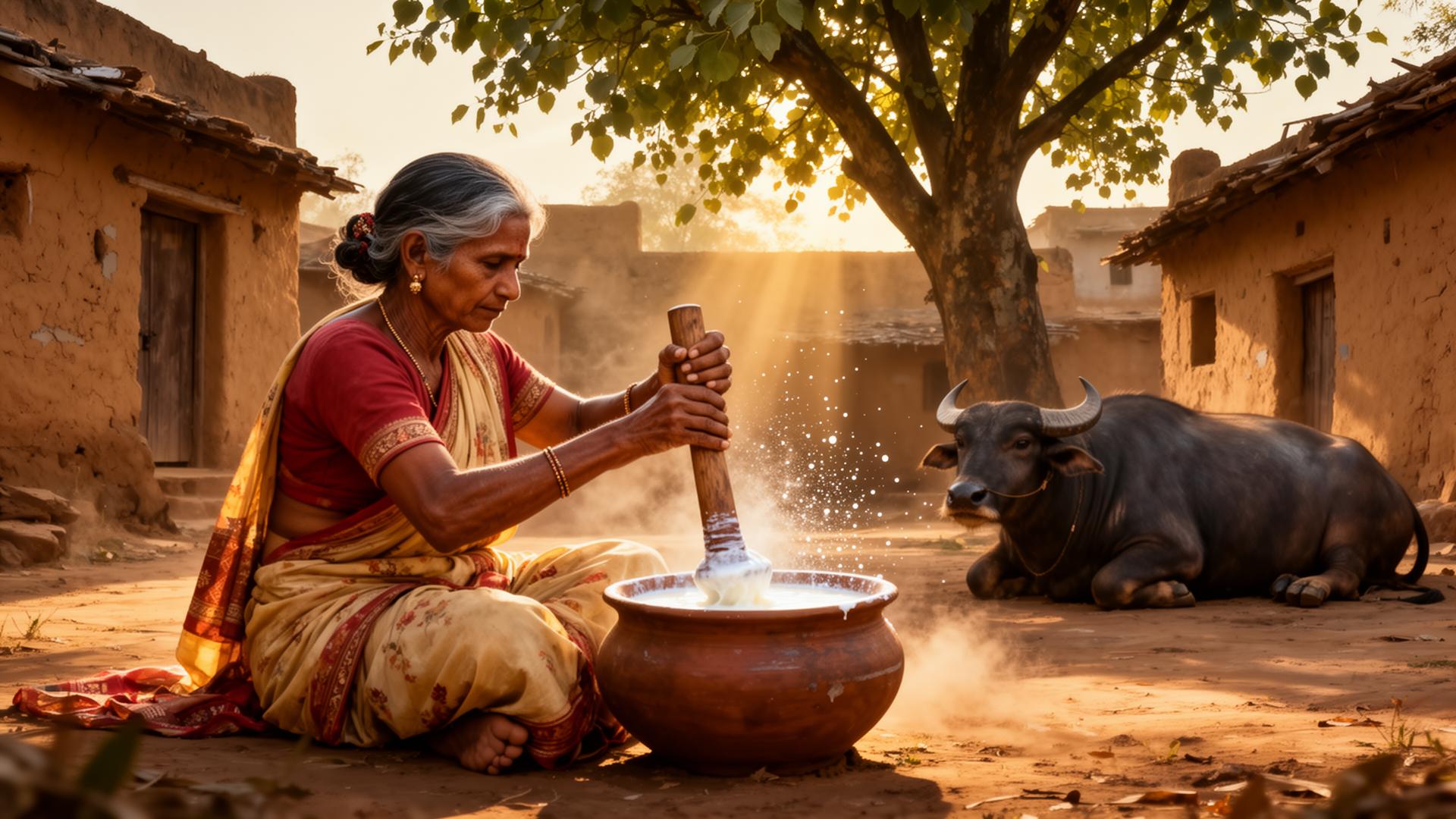
Malai ghee is made by cooking cream (malai) skimmed or separated from milk. Bilona ghee is made by setting whole milk to curd, hand-churning the curd with a wooden bilona into makhan, and cooking the makhan. Bilona ghee is cultured, so it has a deeper, slightly tangy aroma, but it needs more milk per kilo and more labour, so it costs more. Both are real ghee if they pass a purity test.
Quick take
- Malai ghee: cream → cooked. Faster, higher yield, milder taste.
- Bilona ghee: milk → curd → churned makhan → cooked. Cultured, more aromatic.
- Bilona needs more milk per kilo, which is why it costs more.
- Either can be A2; that depends on the animal, not the method.
Many families make malai ghee at home from the cream that collects on boiled milk. Bilona ghee is the older village method. Both are genuine ghee; they differ in how the fat is collected, and that changes taste, yield and price.
Want to taste the difference? Try our A2 bilona ghee, tested at a NABL-accredited lab.
Side by side
| Malai (cream) ghee | Bilona ghee | |
|---|---|---|
| Starting point | Cream from milk (by hand or separator) | Whole milk set to curd |
| Churning | None, or cream churned directly | Curd churned with a wooden bilona into makhan |
| Cultured? | Usually not | Yes, via curd |
| Aroma | Milky, mild | Deeper, slightly tangy |
| Milk per kilo | Lower | Higher (~25–30 L in our process) |
| Time and labour | Less | Overnight setting plus hand-churning |
| Typical price | Lower | Higher |
How malai ghee is made
At home, the malai from boiled milk is collected in the fridge over one or two weeks and then cooked slowly until the milk solids turn golden and the fat clears. Dairies use a separator to spin cream out of large volumes of milk, then cook it. The method recovers most of the milk fat, so it gives more ghee per litre (making ghee at home).
How bilona ghee is made
Whole milk is boiled, cooled and set to curd overnight. The curd is churned with a wooden bilona until makhan floats up and separates from the buttermilk, and the makhan is cooked on a low flame into ghee. Culturing the milk first is what gives bilona ghee its distinctive aroma (cultured ghee, the bilona method). It is also how we make ours (our process).
Is bilona ghee healthier?
Both are almost pure milk fat; the fat profile is set mainly by the animal and its feed (A2 ghee fatty acids). Claims that bilona ghee has dramatically more nutrients are not well supported by published comparisons, so we do not make them. The clear differences are flavour, the cultured process and the traditional craft. If you value those, bilona is worth seeking out; if you want everyday ghee at a lower price, good malai ghee is a sensible choice.
Telling them apart when you buy
- “Bilona” on a label should come with a description of curd and churning, not just a picture of a pot.
- Price is a clue: bilona ghee selling at cream-ghee prices needs explaining (milk per kilo).
- Whatever the method, ask for a purity report (how to read it).
And remember that “A2” is separate from method: it depends on whether the milk came from A2 animals such as buffalo or desi cows (what A2 ghee is, A2 bilona ghee).
Sources & references
Frequently asked questions
What is the difference between malai ghee and bilona ghee?
Malai ghee is cooked from cream separated from milk. Bilona ghee is made by setting whole milk to curd, hand-churning it into makhan and cooking the makhan, which makes it cultured and more aromatic.
Which is better, malai ghee or bilona ghee?
Bilona ghee has a deeper, cultured flavour and traditional method; malai ghee is milder and cheaper. Both are real ghee if they pass purity tests.
Why is bilona ghee more expensive than malai ghee?
Bilona ghee needs more milk per kilo, roughly 25 to 30 litres in A2 Farmer's process, plus overnight curd-setting and hand-churning.
Is homemade malai ghee pure?
Yes, ghee made at home from malai is pure ghee. It is not bilona ghee, because it is made from cream rather than churned curd.
Can malai ghee be A2?
Yes, if the milk came from A2 animals such as buffalo or desi cows. A2 depends on the animal, not the method.
Curd, churned, the bilona way
A2 Farmer Buffalo Bilona Ghee — A2A2 confirmed by PCR, 99.76% milk fat, hand-churned and glass-packed. From ₹799.
Shop A2 Ghee →