Storage · Packaging
Ghee in Glass, Plastic or Tin: Which Packaging Is Best?
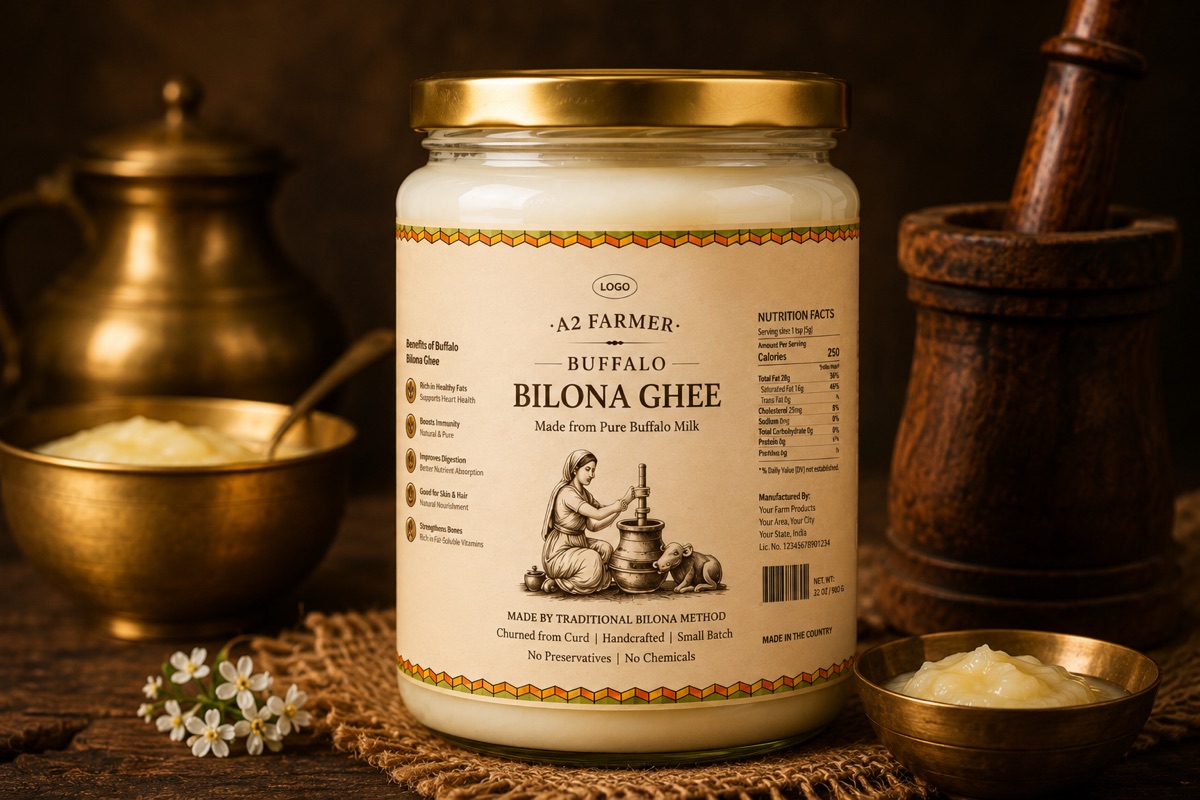
Glass is the best home container for ghee: it is inert, does not absorb odours, seals well and lets you see the ghee. Its weakness is light, so keep the jar in a cupboard. Tins block light and suit bulk ghee but can dent or rust once opened. Food-grade plastic is light and cheap but slightly permeable to oxygen and can hold smells. Whatever the pack, ghee’s enemies are oxygen, light, heat and moisture.
Quick take
- Glass: inert, airtight, odour-free — store in the dark.
- Tin: blocks light; good for bulk; watch for rust and dents.
- Plastic: light and cheap; slight oxygen exposure.
- Ghee spoils from oxygen, light, heat and water.
Ghee keeps for months, but how well depends partly on the container.
We make A2 buffalo bilona ghee, so we have an interest here; figures are from our lab report and the cited sources.
What spoils ghee
Pure ghee has very little water (ours tests at 0.24% moisture), so microbes rarely grow. The main risk is oxidation, where fats react with oxygen, speeded by light and heat, giving a rancid smell. A wet spoon adds water and can bring mould (how to store ghee).
Glass vs tin vs plastic
| Glass | Tin | Food-grade plastic | |
|---|---|---|---|
| Oxygen barrier | Excellent | Excellent | Good to fair |
| Light | Lets light in (store in dark) | Blocks light | Varies with colour |
| Odour / taste | Neutral | Neutral if lined and intact | Can absorb smells |
| Reuse | Easy to wash and reuse | Rusts after opening | Scratches; stains |
| Weakness | Breakable, heavier | Dents, rust | Not ideal for hot filling |
Any food packaging in India must meet FSSAI’s packaging regulations for food-grade materials.
Why we use glass
Glass is inert and seals tightly, keeps ghee’s aroma clean, and lets you see the grain and colour before you buy (why ghee looks white when set). The trade-off is light, which is why we suggest a cupboard, not a sunny shelf.
Buying in tins
Tins suit bulk buyers such as sweet shops. Decant a week’s worth into a smaller jar so the tin is opened less often, and check the net weight: a 15 kg tin holds more than a 15 litre tin (pack sizes in grams).
Tips for any container
- Always use a dry, clean spoon.
- Close the lid tightly; store away from the stove and sunlight.
- Do not melt and re-set the whole jar repeatedly.
- Check the best-before date; ours is 12 months.
Sources & references
Frequently asked questions
Is glass or plastic better for ghee?
Glass, because it is inert, airtight and does not absorb odours. Keep it out of direct light.
Can ghee be stored in a steel container?
Yes, clean dry stainless steel with a tight lid works well.
Is ghee in a tin good?
Tins block light and suit bulk ghee, but can rust once opened; decant into a jar for daily use.
Why does ghee go rancid?
Oxygen, light and heat oxidise the fat; water from a wet spoon can also cause mould.
Glass-packed, lab-tested
A2 Farmer Buffalo Bilona Ghee — A2A2 confirmed by PCR, 99.76% milk fat, hand-churned and glass-packed. From ₹799.
Shop A2 Ghee →